

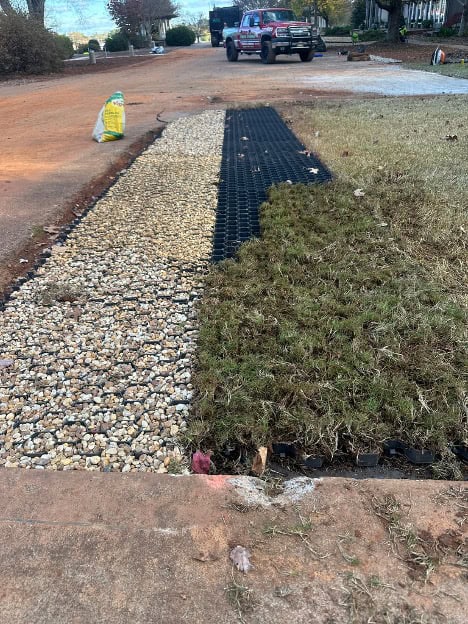
Stop 1: Grass & Gravel Grid
Overview
Quick Facts
Photo Gallery

The Problem
Many landscape areas need stable surfaces that can handle foot traffic, light vehicles, or heavy use, but conventional concrete and asphalt create large impervious expanses. These surfaces generate significant stormwater runoff, radiate heat during warm months, and often eliminate green space that could otherwise absorb rainfall.
The Solution
Pervious grid systems provide structural support while keeping the ground permeable. Various plastic grid products are designed to withstand different weight loads depending on the intended use. Typically, grid systems are used in multi-use areas with moderate foot or vehicle traffic, such as parking spaces or walkways. For aesthetic purposes, small pea gravel, shell, or turf grass can be used as the final surface and is stabilized by the durable plastic grid frame.
How It Works
Interlocking plastic grid panels are placed on a prepared base of compacted stone and bedding material. The grids create a structural matrix that distributes weight evenly across the surface while maintaining open cells that allow water to pass through. Beneath the grid, layers of angular stone provide temporary storage and allow stormwater to slowly infiltrate into the underlying soil.
Design Specifications
Sizing Example
A 160-square-foot impervious surface (such as one parking space) will produce about 13 cubic feet of water during a 1-inch rainfall event. A pervious grid system with a 3-inch-deep reservoir of proper stone (1.5- to 2.5-inch diameter gravel, or No. 2 stone) with 40% void space will capture all of that stormwater and allow it to slowly soak into the ground.
System Layers (Top to Bottom)
- Interlocking plastic grid panels filled with gravel, shell, or loam soil for seeding grass
- Optional 1-inch bedding layer of fine sand
- Geotextile erosion fabric
- Compacted sub-base of clean angular 1.5- to 2.5-inch stone (No. 2 stone) at 6 to 12 inches deep
- Thin plastic geo-grid or erosion fabric at subgrade level
- Prepared subgrade soil with adequate infiltration rate
Try It Yourself
Pervious grids are ideal for homeowners looking to create stable parking areas, reinforce erosion-prone lawn sections, or build attractive walkways without adding impervious surface. The grass-filled option is particularly popular for overflow parking areas that need to remain green, and the gravel option works well for patios and low-maintenance walkways.
For Professionals
Some stormwater mitigation projects required by government agencies for new construction permits may need different depths or volumes for stormwater storage, which will be determined by the agency and stormwater engineers. The Georgia Stormwater Management Manual, Volume 2: Technical Handbook (2016) provides detailed specifications for pervious surface systems.
Resources
Download fact sheets, design guides, and technical resources for this practice.
-
Pervious Grid Systems Fact Sheet Coming Soon
-
Pervious Grid Base Layer Design Guide Coming Soon
- Georgia Stormwater Management Manual