

Stop 6: Bioswale
Overview
Quick Facts
Photo Gallery
The Problem
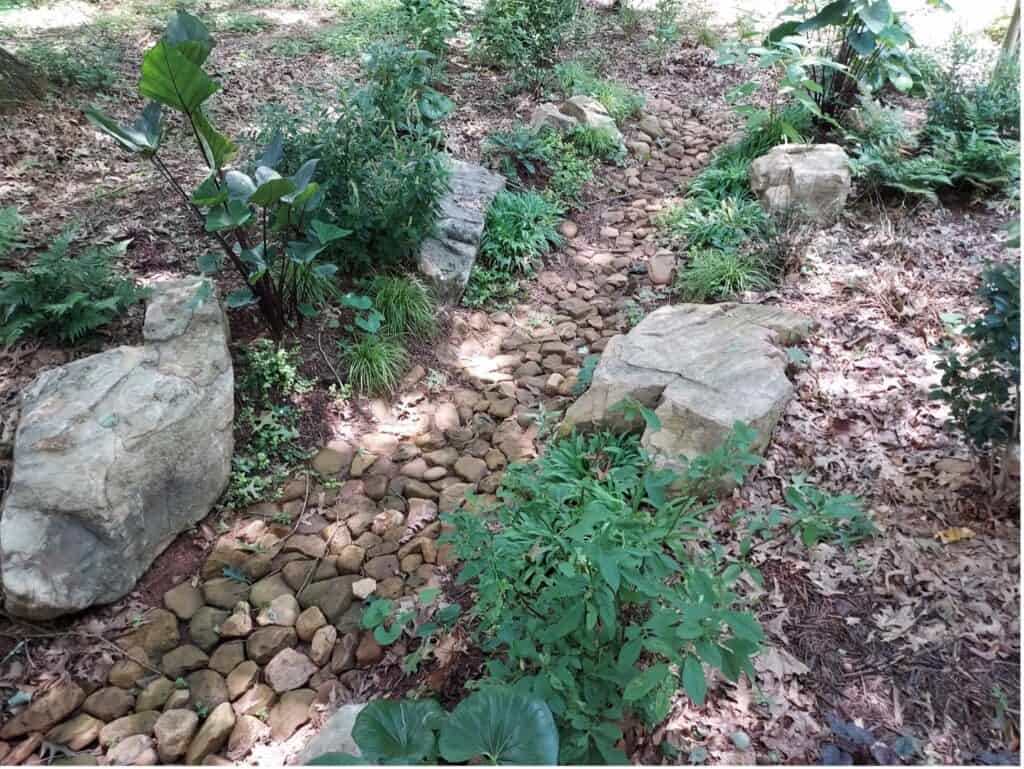
A bare drainage channel moves water fast, and fast water scours its own banks and carries whatever it picks up (sediment, fertilizer, pesticides, oil) toward the nearest stream. At this site, runoff arrives through the dry creek bed below the foot bridge and needs slowing before it reaches the rain garden downstream.
The Solution
A bioswale does two jobs a bare ditch can’t: it carries water and cleans it on the way. Gentle slopes, native plants, a highly permeable soil mix, and placed stone slow the flow so sediment settles out, while plant roots and soil filter pollutants and let part of the water soak in.
How It Works
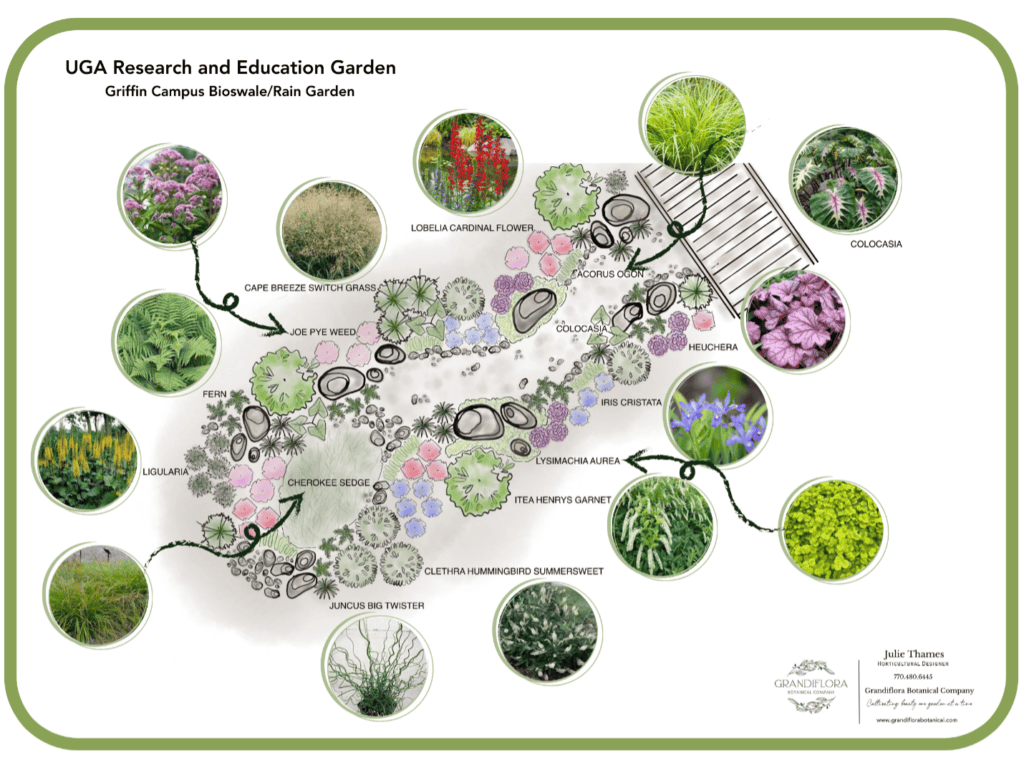
At the demonstration site, the bioswale receives water flowing from the existing dry creek bed, downstream of the foot bridge. As water moves through the channel, plants and boulders slow its velocity and spread the flow across the swale width. The slowed water has time to infiltrate into the soil, reducing the volume of stormwater reaching the rain garden downstream.
Design Specifications
Key Specifications
- Channel length approximately 15 feet, width approximately 6 feet
- Maximum downstream slope of 2% (no more than 4 in. drop from beginning to end)
- Maximum side slopes of 2:1
- 18-inch boulders placed to slow and spread water flow
- Medium flat river rock for channel bed stabilization
- Native and adapted plant species for filtration
Water flow: Receives water from the dry creek bed and directs flow to the rain garden (Stop 7).
Try It Yourself
Bioswales can be adapted for residential properties wherever water naturally flows across the landscape. Even a small swale along a property line or between a driveway and lawn can significantly reduce runoff velocity and filter pollutants. Home-scale bioswales are typically narrower (3-4 feet wide) and can be designed as attractive garden features using native perennials and ornamental grasses.
For Professionals
Bioswale design for compliance applications should reference the Georgia Stormwater Management Manual for sizing calculations, vegetation specifications, and maintenance requirements. For larger commercial projects, bioswales are often integrated into site drainage plans as a pre-treatment measure before water enters detention or retention systems.
Resources
Download fact sheets, design guides, and technical resources for this practice.
-
Bioswale Design Fact Sheet Coming Soon
-
Native Plants for Bioswales in Georgia Coming Soon
- Georgia Stormwater Management Manual