

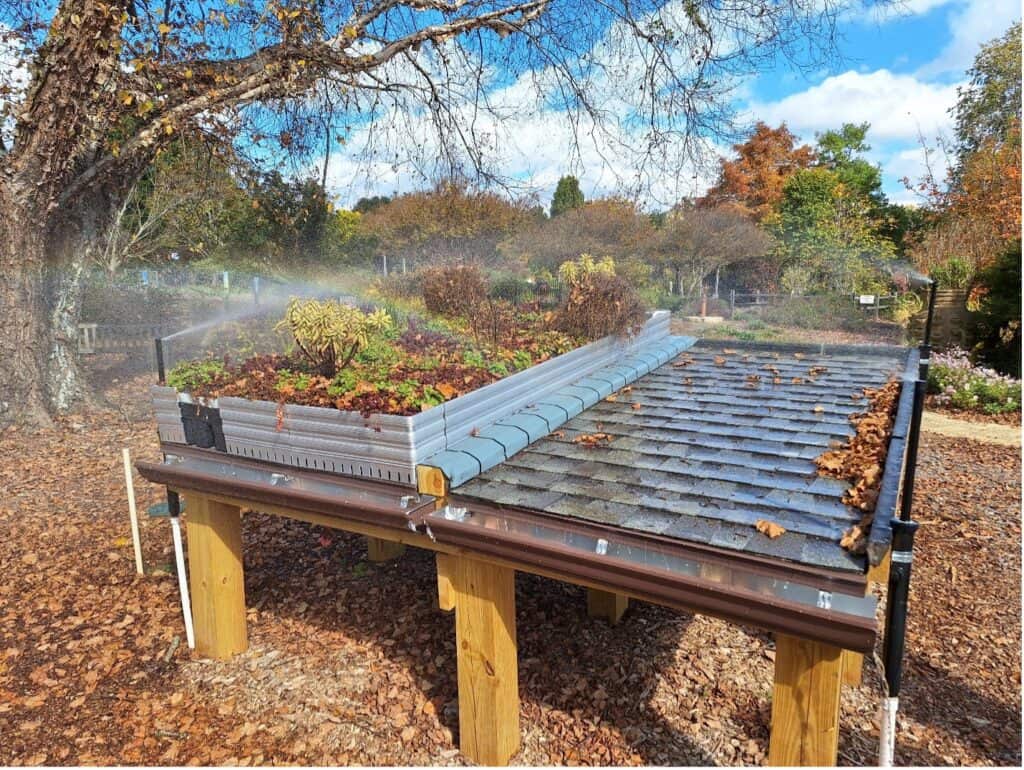
Stop 3: Green Roof Display Table
Overview
Quick Facts
Photo Gallery


The Problem
Conventional rooftops are impervious surfaces that shed nearly all rainfall as runoff. On most properties the roof is the single largest source of stormwater: every square foot drains to a downspout and out onto the ground within minutes of a storm starting.
The Solution
Green roofs intercept rainfall at its source. The growing media absorbs water, plants take it up through their roots and release it back to the atmosphere through evapotranspiration, and the drainage layers slow any excess before it leaves the system. Even a shallow extensive green roof holds back much of the rain that would otherwise run straight off: up to 60% or more of annual rainfall stays on the roof surface.
How It Works
The demonstration display uses a table-mounted model that shows both a conventional shingled roof surface and a green roof surface side by side. Rain simulator sprayers deliver water to both surfaces, allowing visitors to observe the difference in runoff behavior in real time.
Green Roof System Layers (Top to Bottom)
- Plants (Sedum species selected for drought tolerance and shallow root systems)
- Growing media (lightweight engineered soil mix)
- Filter fabric (prevents fine particles from clogging drainage layer)
- Drainage layer with water retention reservoir
- Root barrier membrane
- Waterproofing membrane
- Roof deck structure
Design Specifications
The green roof system at the demonstration site uses LiveRoof’s RoofBlue RETAIN™, a planter module with extra storage space below the plants for rainwater. Excess infiltrated rainwater is stored in the reservoir, then wicked up through fabric back into the plant growing media and root zone.
Typical extensive green roof systems (those with a growing media depth of 6 inches or less) use lightweight engineered soil mixes and drought-tolerant plants that require minimal maintenance once established.
Try It Yourself
While full-scale green roof installation requires professional structural assessment, homeowners can apply green roof principles to garden sheds, carports, dog houses, and covered porches. Small-scale green roof kits and modular tray systems make DIY installation feasible for structures that can support the additional weight (typically 15–25 pounds per square foot when saturated).
Provided you have a strong roof and low slope, the extensive (low profile, large area) green roof installation costs can range between $10 to $30 per square foot. This varies based on the roof size, slope, required waterproof membranes, and labor costs. A 2,000 square foot residential roof project can cost between $20,000 to $60,000.
For Professionals
Green roof design requires structural load analysis, proper waterproofing specification, and plant selection appropriate for the local climate zone. The Georgia Stormwater Management Manual addresses green roofs as a source control practice. Consult with a structural engineer before specifying green roof systems on existing buildings.
Resources
Download fact sheets, design guides, and technical resources for this practice.
-
Green Roof Systems Fact Sheet Coming Soon
-
Green Roof Plant Guide for Georgia Coming Soon
- Georgia Stormwater Management Manual