

Stop 8: Cistern
Overview
Quick Facts
Photo Gallery

The Problem
Large roof areas generate substantial volumes of stormwater during a storm, far more than rain barrels can capture. Without a storage system, this water becomes runoff that contributes to erosion, flooding, and water quality degradation. At the same time, landscape irrigation accounts for a large share of residential and institutional water use.
The Solution
Cisterns bridge the gap between small rain barrel collection and engineered stormwater detention systems. They capture rooftop runoff in volumes meaningful enough to supply supplemental irrigation or non-potable domestic uses, or to significantly reduce the stormwater contribution from a building. When configured for passive drawdown, cisterns empty slowly between storms, ensuring storage capacity is available for the next rain event.
How It Works
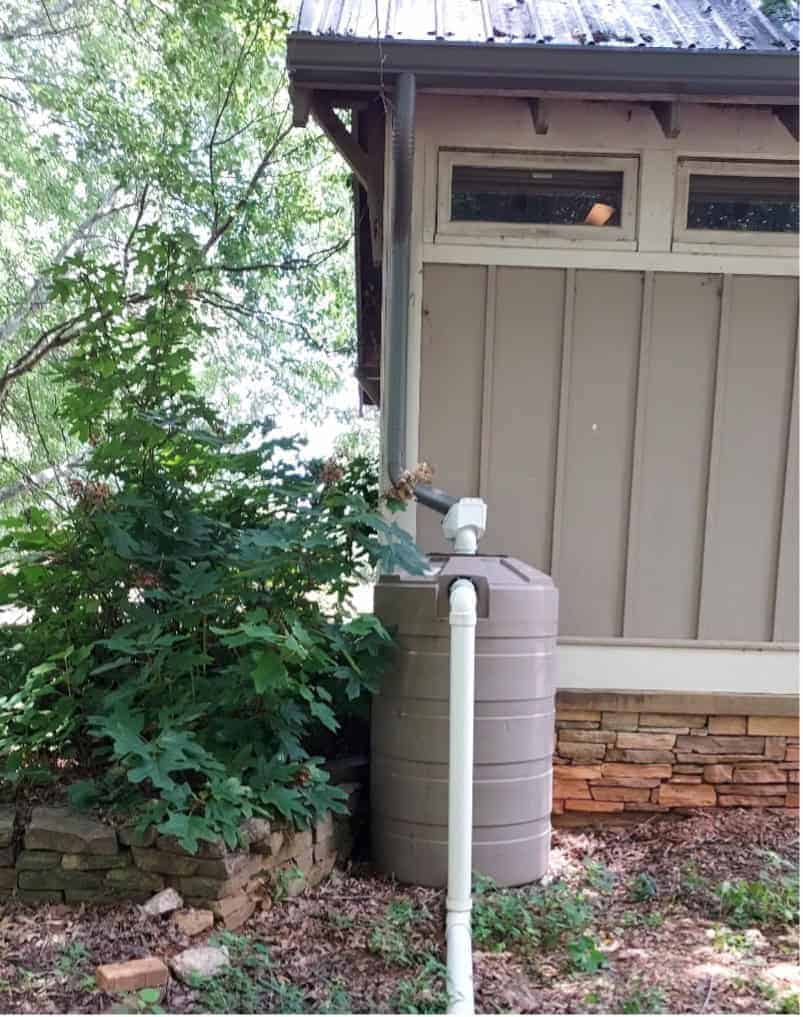
At the demonstration site, a 200-gallon cistern collects rooftop runoff from the building via repaired gutters fitted with leaf guards. A downspout pre-filter screen installed 5 feet off the ground removes debris before water enters the cistern. The system features dual outlets: a hose faucet for manual irrigation use and a passive drawdown valve that slowly drains water to the nearby dry well (Stop 9) between rain events.
Design Specifications
System Components
- 200-gallon capacity cistern (42 in. high x 40 in. wide)
- Gutter with leaf guard on building roof
- Downspout pre-filter screen (installed 5 ft. above ground)
- Hose faucet for manual irrigation access
- Passive drawdown valve for slow drainage between storms
- Overflow outlet near top, routed to dry well
- Stable, level base pad
Try It Yourself
Cisterns are ideal for homeowners with larger roof areas who want to maximize rainwater capture beyond what rain barrels provide. They can be installed above ground, partially buried, or fully underground depending on available space and budget. Above-ground cisterns are the most affordable option and can be connected to drip irrigation systems for automated garden watering.
For Professionals
For commercial and institutional projects, cisterns can be sized to meet specific stormwater management credits under local ordinances. Underground cistern systems offer the largest storage volumes without impacting usable site area. The Georgia Stormwater Management Manual addresses rainwater harvesting systems in its source control practices section.
Resources
Download fact sheets, design guides, and technical resources for this practice.
-
Cistern Systems Fact Sheet Coming Soon
-
Rainwater Harvesting System Design Guide Coming Soon
- Georgia Stormwater Management Manual