

Stop 7: Rain Garden
Overview
Quick Facts
Photo Gallery


The Problem
By the time runoff has crossed a few rooftops, driveways, and lawns, there is more of it, moving faster, than ordinary turf can soak up. The extra water sheets off, taking soil and pollutants with it. At this site, that flow arrives as overflow from the bioswale and needs somewhere to slow down and sink in.
The Solution
Rain gardens work by concentrating runoff in a shallow depression filled with engineered soil that drains quickly. As water filters through the soil mix and plant roots, pollutants are trapped, broken down, or absorbed. The garden is designed to drain completely within 24 to 48 hours under typical soil conditions, preventing mosquito breeding while allowing the soil to dry between rain events.
How It Works
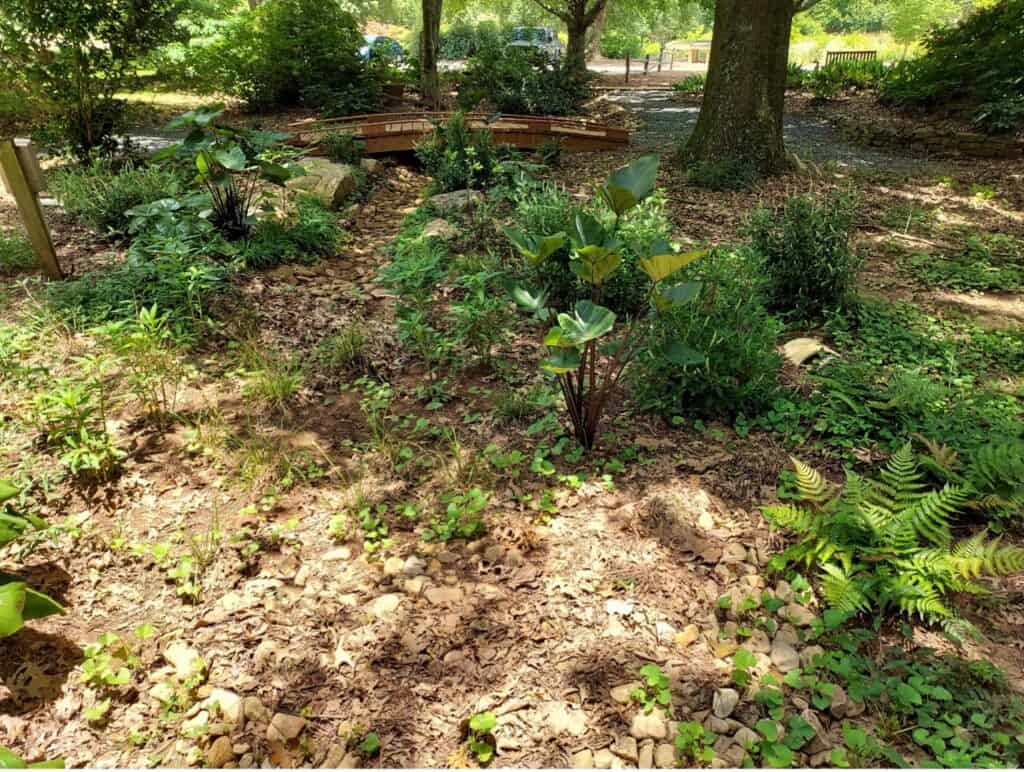
At the demonstration site, the rain garden receives overflow from the bioswale. Water enters through a rock apron inlet, spreads across the garden basin, ponds to a depth of approximately 6 inches, and then slowly infiltrates through 18 inches of amended rain garden soil mix. Three groupings of 18-inch boulders serve as rock features on the garden slopes, adding visual interest and helping dissipate water energy.
Design Specifications
Key Specifications
- Basin area: approximately 80 square feet (10 ft. diameter)
- Maximum ponding depth: 6 inches
- Soil mix: 18 inches deep (50–60% sand, 20–30% topsoil, 20–30% compost)
- Drain time target: 24–48 hours complete drainage
- Three groupings of 18-inch boulders for visual interest
- Rock apron inlet and overflow outlet
Water flow: Receives overflow from the bioswale (Stop 6).
Try It Yourself
A rain garden fits almost any yard and can be sized to the runoff it receives. It can be designed to complement existing landscaping. A typical residential rain garden is 100–300 square feet and can be installed as a weekend project with basic gardening tools. Choose plants suited to your soil and sun conditions, and position the garden at least 10 feet from your foundation.
For Professionals
Rain garden sizing for compliance should account for contributing drainage area, local rainfall intensity data, and soil infiltration rates. The Georgia Stormwater Management Manual provides detailed bioretention design guidance. For projects requiring water quality credit, an underdrain system may be specified in areas with slow-draining native soils.
Resources
Download fact sheets, design guides, and technical resources for this practice.
-
Rain Garden Planning Guide Coming Soon
-
Rain Garden Soil Mix Specifications Coming Soon
-
Rain Garden Plant List for Georgia Coming Soon
- Georgia Stormwater Management Manual
- City of Doraville Rain Garden Guide