

Stop 9: Dry Well
Overview
Quick Facts
Photo Gallery


The Problem
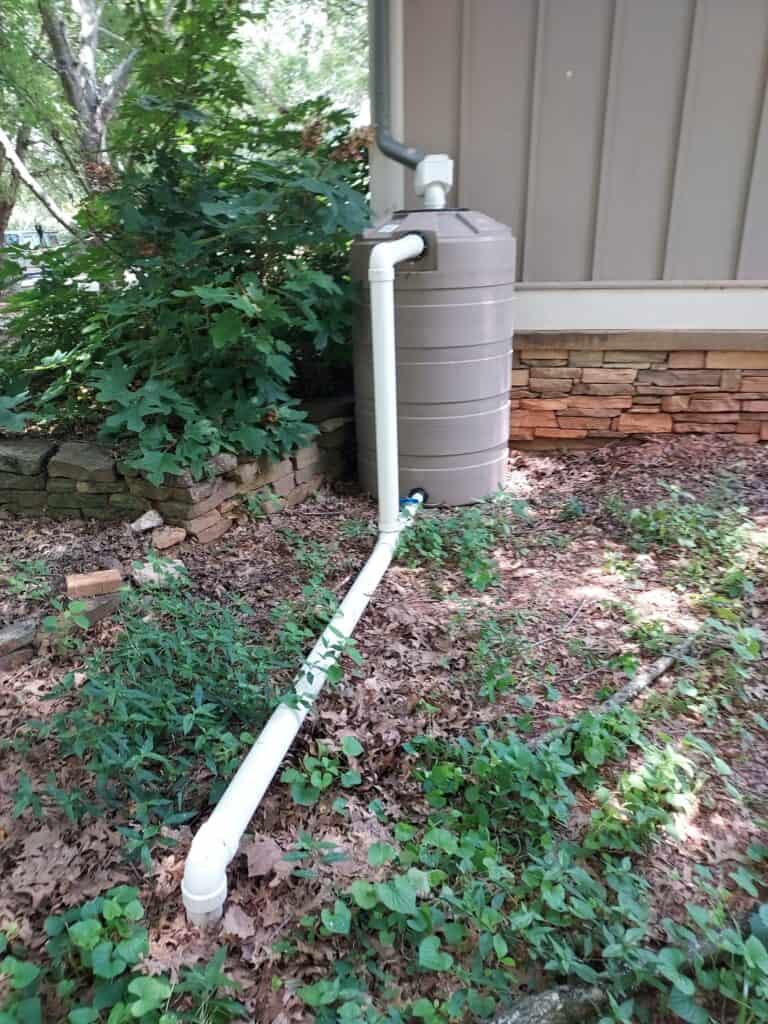
Sometimes there is runoff to manage but no room left on the surface to manage it: the yard is planted, paved, or already spoken for. A property may also need to absorb overflow from another practice without giving up usable space. At this site, the dry well takes passive drawdown and overflow from the cistern and moves it underground.
The Solution
Dry wells provide significant reductions in stormwater runoff while remaining completely hidden underground. They reduce downhill flooding and water pollution by capturing runoff and allowing it to slowly infiltrate into the surrounding soil.
How It Works
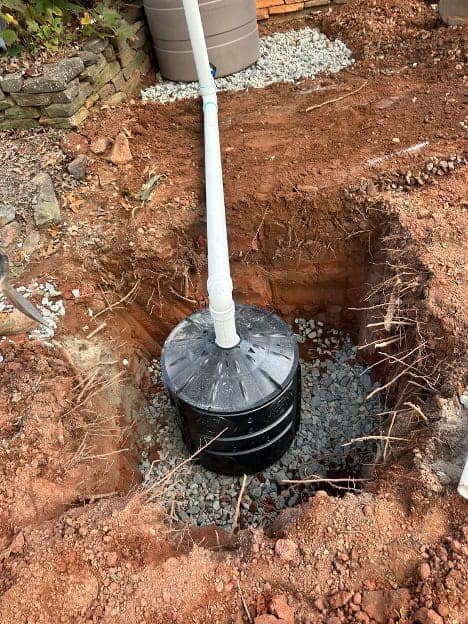
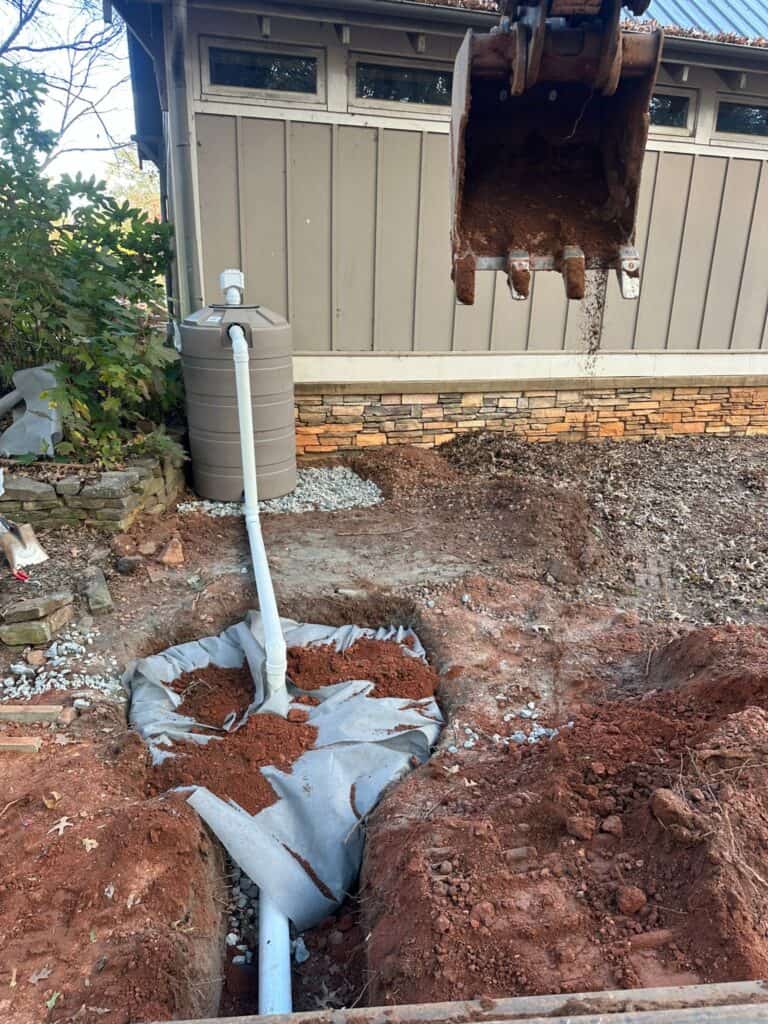
At the demonstration site, the dry well receives passive drawdown and overflow from the cistern (Stop 8). Water enters the dry well through a surface drain connection, fills the stone reservoir and well chamber, and then slowly infiltrates into the surrounding and underlying soils. A pop-up emitter delivers any overflow beyond the dry well’s capacity to the lawn area near the rain garden during exceptionally heavy storms.
Design Specifications
Location Requirements
- Permeable soils with adequate infiltration rate
- Groundwater table more than 2 feet below the bottom
- Located in lawn or other disturbed pervious area
- Not where fine sediment (clay, silt) accumulates
Required Setback Distances
Maintain appropriate setbacks from building foundations, property lines, septic systems, and wells per local codes.
System Components
- 50-gallon dry well chamber (such as NDS Flo-Well)
- 1 ft. base of crushed, washed 3/4 in. No. 57 stone
- 1 ft. perimeter of the same stone
- Geotextile fabric wrapping
- Surface drain inlet connection
- Pop-up emitter for overflow
Try It Yourself
Dry wells are an excellent solution for homeowners who want to manage stormwater without giving up yard space. They work well for receiving downspout discharge, rain barrel overflow, or runoff from small impervious areas. A basic dry well system can be installed in a weekend with standard excavation tools. Position the dry well at least 10 feet from building foundations and ensure the surrounding soil drains adequately.
For Professionals
For compliance applications, dry well sizing must account for contributing drainage area, design storm depth, soil infiltration rates, and seasonal high groundwater elevation. Multiple dry wells can be connected in series for larger projects. The Georgia Stormwater Management Manual provides guidance on subsurface infiltration practices.
Resources
Download fact sheets, design guides, and technical resources for this practice.
-
Dry Well Installation Guide Coming Soon
-
Subsurface Infiltration Design Specifications Coming Soon
- Georgia Stormwater Management Manual